On my sailboat I have an AIS box Camino 108. This box has an USB exit which I use to send the AIS data to my Win11 laptop. The laptop receives the AIS data through an USB-A cable that plugs inside the laptop and appears as a COM port.
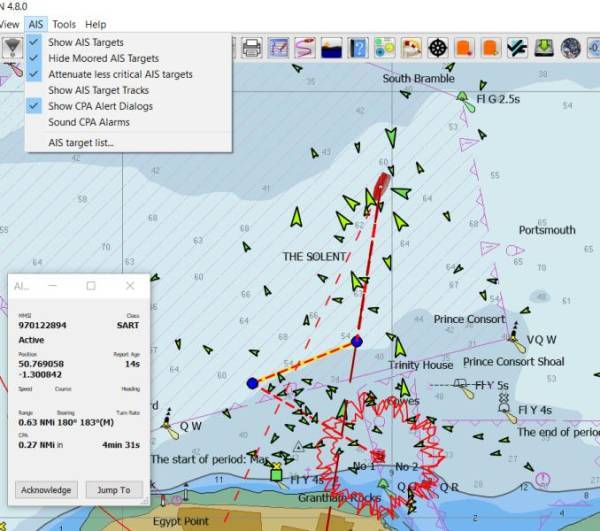
I’d like to send the AIS data also to the Samsung Android tablet that I use as a navigation plotter in the cockpit of the boat.
So, my first question is: may I split the AIS signal into two cables, one that plugs as USB-A into the laptop and one that plugs as USB-C into the tablet?
I am already using an USB-C cable to power the tablet: on the boat I have a 12V-5V converter that draws 12V power from the batteries of the boat and feeds the tablet through an USB-C cable.
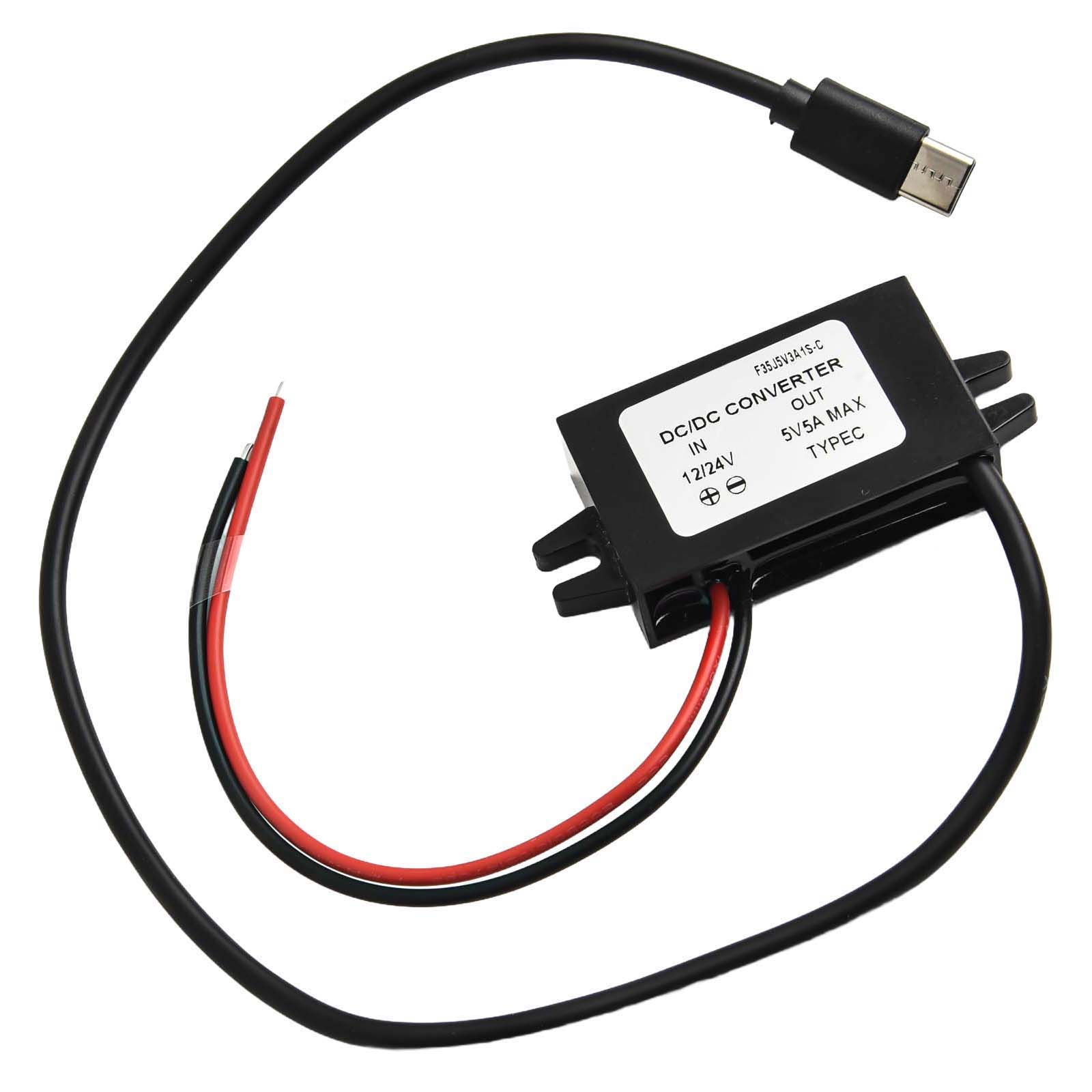
My second question is then: can I use the same USB-C cable to send both power and AIS signal to the tablet?
I am aware that an USB-A cable has 4 wires:
- VBUS (red wire) — power supply (+5V)
- D- (white wire) — data minus
- D+ (green wire) — data plus
- GND/Ground (black wire) — common ground/return
I am aware that an USB-C cable has 8 wires:
- 2 power wires (VBUS and Ground) — for charging and power delivery
- 2 data wires (D+ and D-) — for data transfer
- 2 Configuration Channel (CC) wires — to negotiate power and data capabilities
- 2 SBU (Sideband Use) wires — for alternate functions like video/audio
I guess I should be able to extract the AIS signal from the D-/D+ wires of the USB-A cable coming from the Camino 108 box and send them through the USB-C. Meanwhile I’d use the VBUS/GND wires coming from the 12V-5V converter to send power to the tablet.
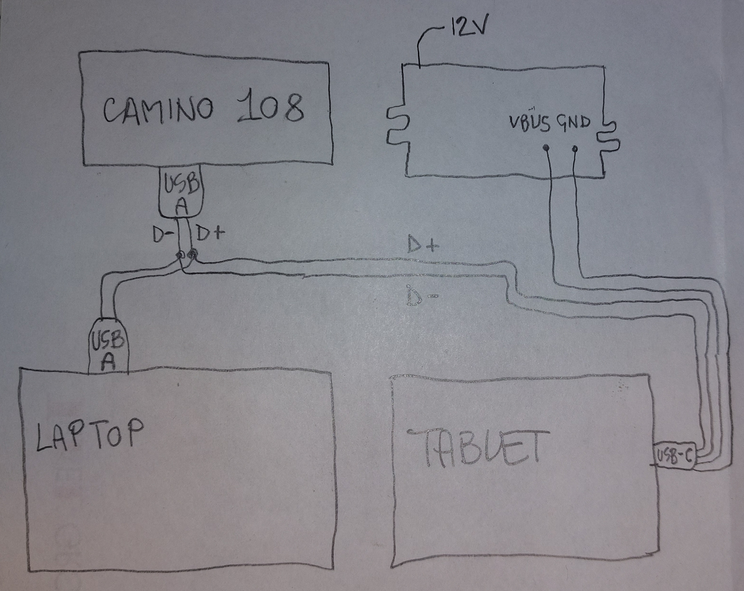
I would ignore the red+black wires of the USB-A cable from the AIS box. I assume that only the two power wires are used in the USB-C cable coming from the converter.
IS ALL THIS DOABLE?
Is my intent correct?
I wonder what is the function of the two CC wires. What do we mean by “negotiating power and data capabilities”